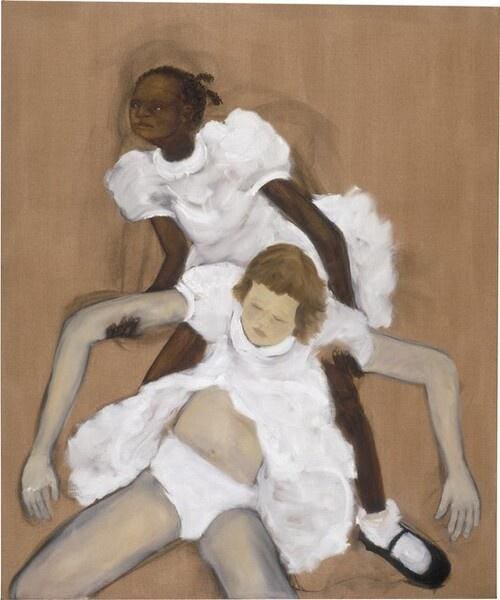
In Toni Morrison’s "Recitatif," the first-person point of view of Twyla functions as a trap, forcing the reader to experience the story through a highly subjective and unreliable lens. Initially, Twyla and Roberta are presented as vulnerable children, "eight years old and got F's all the time". Bonded by being"dumped"at St. Bonny’s, they are seen by others as"salt and pepper". Morrison famously executes the removal of all racial codes to obscure who is Black and who is white.
Because the narrative is tethered entirely to Twyla, we only have access to her biased memories and shifting motivations. As the women age and navigate changing socioeconomic classes, their conflict centers on Maggie, the mute and "sandy-colored" kitchen worker. During a heated protest over school bussing, Roberta aggressively challenges Twyla’s constructed memory, shouting, "You kicked a black lady and you have the nerve to call me a bigot". Twyla’s perspective begins to fracture under this accusation. She realizes her memory has acted as a self-serving psychological shield, ultimately confessing to herself, "I didn't kick her... but I sure did want to".
Morrison uses Twyla’s limited POV to demonstrate how memory is shaped by guilt and social conditioning. By denying us objective truth, Morrison ensures that, as Zadie Smith notes, "the subject of the experiment is the reader". We are forced to rely on our own preconceptions to fill in the blanks, proving that our understanding of the characters' identities is just as flawed and constructed as Twyla’s own memory.